Top 8 Skills Pharma Graduate Learn for Better Job Opportunities


Top 8 Skills Pharma Graduate Learn for Better Job Opportunities

In today’s competitive job market, https://in.indeed.com/career-advice/resumes-cover-letters/basic-computer-skillsa degree alone isn’t always enough. As a pharma graduate, gaining additional skills can open doors to exciting and better-paying opportunitiesβ€”both within and beyond the pharmaceutical industry.

Let’s break down the most important skills you should consider learning to stand out and succeed.

1. Basic IT and Computer Skills

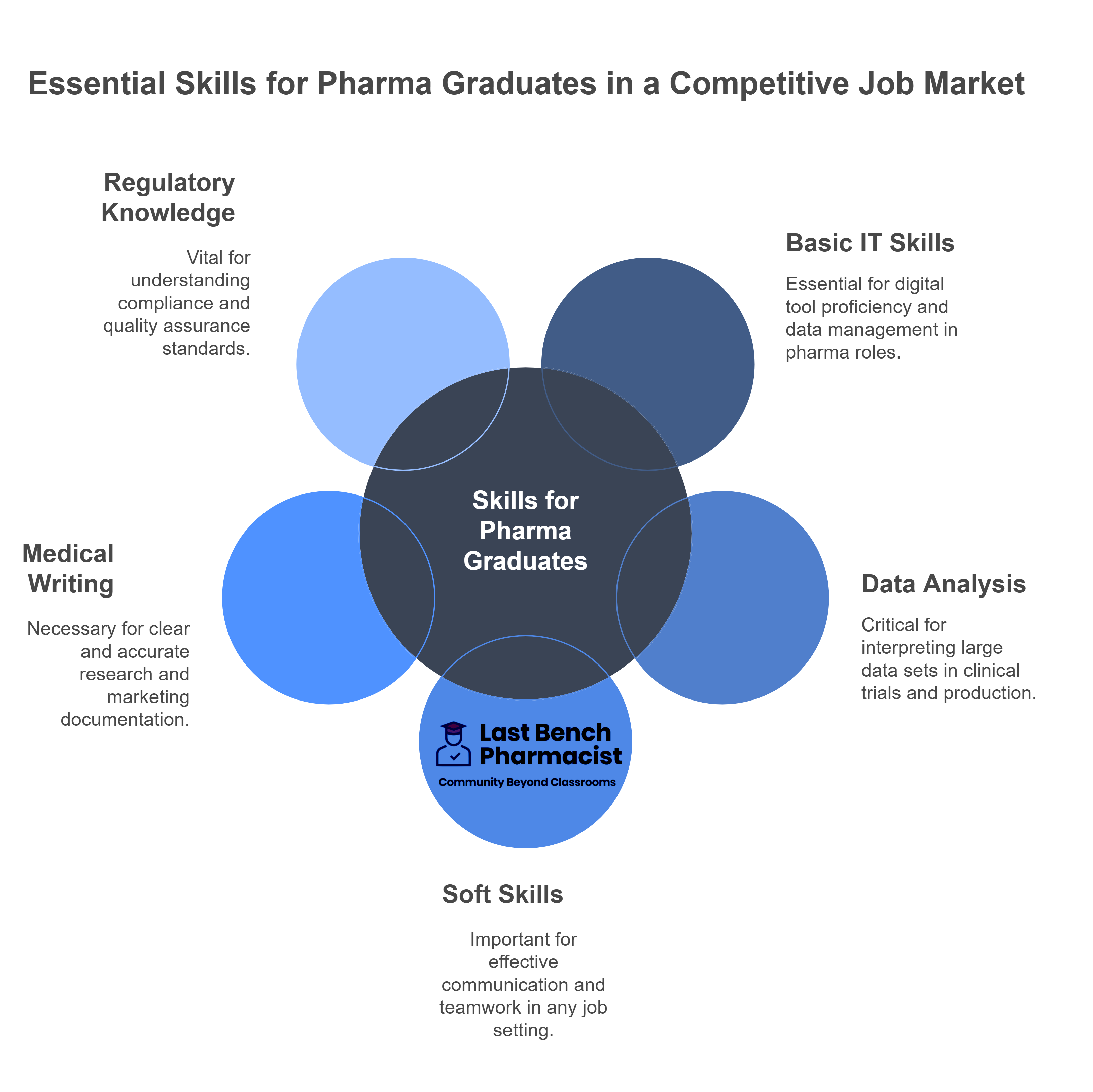
Why it matters: Most pharma roles today involve digital tools, data entry, or online platforms.

Skills to learn:

  • Microsoft Excel (for data entry and analysis)
  • PowerPoint (for presentations)
  • Basic troubleshooting and digital literacy
  • Google Workspace

πŸ‘‰ Free Google Workspace Training


2. Data Analysis and Interpretation

Why it matters: Pharma industries deal with massive amounts of dataβ€”from clinical trials to production.

Skills to learn:

  • Excel (Advanced)
  • Power BI / Tableau
  • Python or R (basic data analysis)

πŸ‘‰ Free Data Analysis Course – Coursera


3. Soft Skills

Why it matters: Communication, teamwork, and problem-solving are key in any job.

Skills to improve:

  • Public speaking
  • Report writing
  • Team collaboration
  • Time management

πŸ‘‰ Effective Communication – edX


4. Medical Writing & Documentation

Why it matters: Pharma companies often need clear and accurate documentation for research, trials, and marketing.

Skills to learn:

  • Scientific writing
  • Regulatory documentation
  • Grammar and proofreading

πŸ‘‰ Learn Medical Writing – Udemy


5. Regulatory Affairs Knowledge

Why it matters: Understanding regulatory frameworks like FDA, ICH, and CDSCO is vital for many roles.

Skills to learn:

  • Drug approval process
  • Compliance documentation
  • Quality assurance standards

πŸ‘‰ Intro to Regulatory Affairs – PharmaLessons


6. Digital Marketing (for Pharma Products)

Why it matters: With the rise of e-pharmacies, pharma graduates with digital marketing knowledge can stand out.

Skills to learn:

  • SEO & SEM
  • Content marketing
  • Email campaigns
  • Social media promotions

πŸ‘‰ Google Digital Garage – Free Course


7. Industry-Specific Software

Why it matters: Many companies use specific software tools for compliance and documentation.

Tools to explore:

  • LIMS (Laboratory Information Management Systems)
  • SAP
  • Veeva Systems

8. Clinical Research Basics

Why it matters: Roles in clinical trials and research require knowledge of clinical processes and ethics.

Skills to learn:

  • Clinical trial phases
  • GCP (Good Clinical Practices)
  • Ethics in human studies

πŸ‘‰ NIH GCP Training (Free)


Final Thoughts

Pharma graduates who combine their degree with tech, communication, and data-driven skills are more likely to land jobs in clinical research, regulatory affairs, medical writing, data analysis, and even IT-related pharma roles.

Tip: Focus on one skill at a time. Start small, practice daily, and keep building.


βœ… Need Daily Job Alerts and Skill Tips?

Follow β€œLast Bench Pharmacist” for daily pharma job updates and career growth tips.

πŸ“² Join Our WhatsApp Channel – JOIN


What Skills Should a Pharma Graduate Learn for Better Jobs?


What Skills Should a Pharma Graduate Learn for Better Job Opportunities?

In today’s competitive job market, a pharmacy degree alone may not be enough. To stand out and land high-paying roles in the pharma or tech-driven healthcare industries, pharmacy graduates should build additional skills that make them more versatile and valuable to employers.

Let’s break down the most essential skills that can enhance your career prospects after graduation.


1. Communication Skills

Why it matters: Whether you’re in sales, research, or documentation, being able to explain complex concepts clearly is vital.

  • Work on verbal and written communication
  • Learn how to write professional emails and reports
  • Practice public speaking and presentation skills

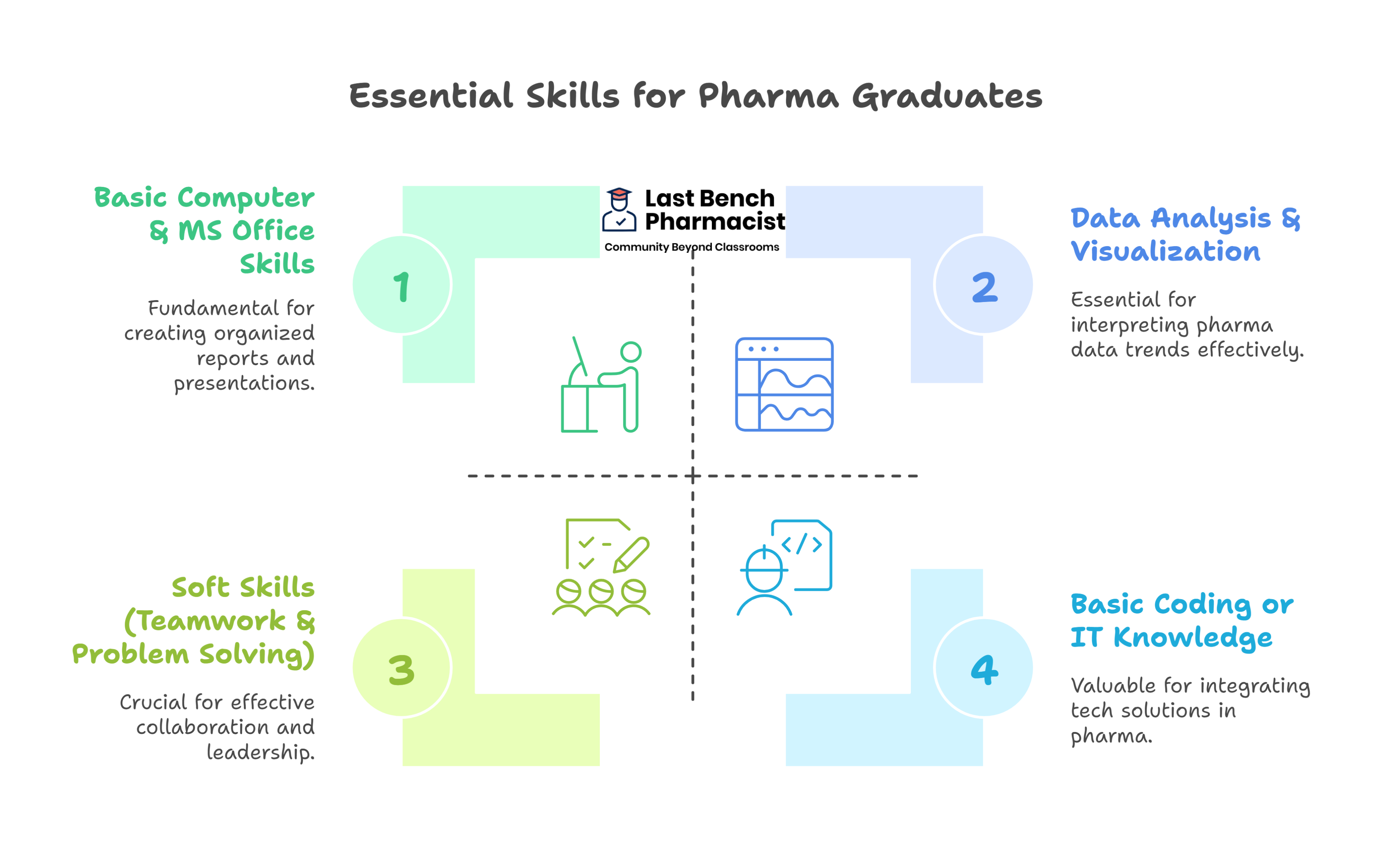
2. Basic Computer & MS Office Skills

Why it matters: Every job today requires basic tech proficiency.

  • Master tools like Excel, Word, PowerPoint
  • Learn shortcuts, data handling, and document formatting
  • Create organized spreadsheets and reports

βœ… Free MS Excel Basics Course – Microsoft Learn


3. Data Analysis & Visualization

Why it matters: Pharma companies rely on data for decision-making.

  • Learn tools like Excel, Power BI, or Tableau
  • Understand how to handle data and create visual reports
  • Know how to interpret trends and outcomes

βœ… Learn Data Visualization – Coursera


4. Soft Skills (Teamwork & Problem Solving)

Why it matters: Employers value candidates who work well with others.

  • Collaborate with peers during projects
  • Practice listening and understanding others’ opinions
  • Build emotional intelligence and leadership mindset

5. Digital Literacy

Why it matters: Understanding digital tools is crucial in today’s evolving pharma industry.

  • Explore e-learning platforms like LinkedIn Learning, Coursera
  • Get familiar with healthcare tech tools like ERP or CRM software
  • Stay updated with digital health trends

6. Regulatory Affairs Knowledge

Why it matters: Many roles require understanding drug laws and regulations.

  • Learn about FDA, ICH, CDSCO guidelines
  • Take free online courses or join short certification programs
  • Stay current with global regulatory updates

βœ… Regulatory Affairs Courses – FutureLearn


7. Basic Coding or IT Knowledge (Optional, but High Value)

Why it matters: Tech is merging with pharma. IT skills can open doors to non-traditional careers.

  • Learn beginner coding: HTML, Python, or SQL
  • Understand how software systems work in healthcare
  • Build small projects like drug database apps or dashboards

βœ… Python for Beginners – W3Schools


πŸ“š Final Thoughts

Pharma graduates who invest time in building technical, soft, and digital skills have a far better chance of landing diverse rolesβ€”in pharma companies, hospitals, IT firms, and even startups.

Start small, stay consistent, and always be curious to learn more.


πŸ’¬ Have questions or suggestions? Drop them in the comments below!

πŸ”” Follow Last Bench Pharmacist for daily pharma career insights…


Can Pharma Graduates Start an Online Business?


Can Pharma Graduates Start an Online Business?

In today’s fast-paced digital world, starting an online business is no longer limited to tech-savvy individuals. Even graduates from fields like pharmacy can successfully create and run profitable ventures online. With a solid foundation in science and healthcare, pharma graduates can tap into a variety of online business opportunities that not only generate income but also create value in the health sector.

Let’s break down how pharma graduates can start and grow an online business step by step.


Why Should Pharma Graduates Consider Online Business?

  • Job Market Challenges: The pharma job market is competitive, and entry-level roles may not always meet expectations in terms of salary or growth.
  • Flexible Career Path: Online businesses allow pharma graduates to work on their own terms, giving them control over time, earnings, and work environment.
  • Growing Healthcare Demand: The need for health-related content, services, and products is growing. With a pharma background, you can build trust and authority in this niche.

Top Online Business Ideas for Pharma Graduates

Here are some proven and practical business ideas that suit pharma graduates:

1. Health Blogging or YouTube Channel

  • Share health tips, explain medications, or create disease awareness videos.
  • Monetize through ads, sponsorships, or affiliate marketing.

2. Affiliate Marketing

  • Promote healthcare products, supplements, or devices.
  • Earn a commission for every sale through your referral link.

Platforms to explore: EarnKaro, Amazon Associates, 1mg Affiliate

3. Online Pharmacy or Dropshipping

  • Start an eCommerce site selling OTC products, personal care items, or wellness supplements.
  • Use dropshipping to avoid inventory management.

4. Freelance Medical Writing

  • Write for pharma companies, blogs, or publications.
  • High demand in creating drug monographs, regulatory documents, and patient education material.

5. Digital Courses or eBooks

  • Create and sell courses on pharma topics or career guidance for pharma students.
  • Use platforms like Gumroad or Udemy.

6. Virtual Consultation Services

  • If you’re certified, offer online consultations for basic health concerns or medication use.
  • Partner with telemedicine platforms or start your own site.

7. LinkedIn or Instagram Personal Brand

  • Build your personal brand in pharma and healthcare education.
  • Offer mentorship, paid webinars, or resume services for pharma job seekers.

Steps to Start Your Online Business

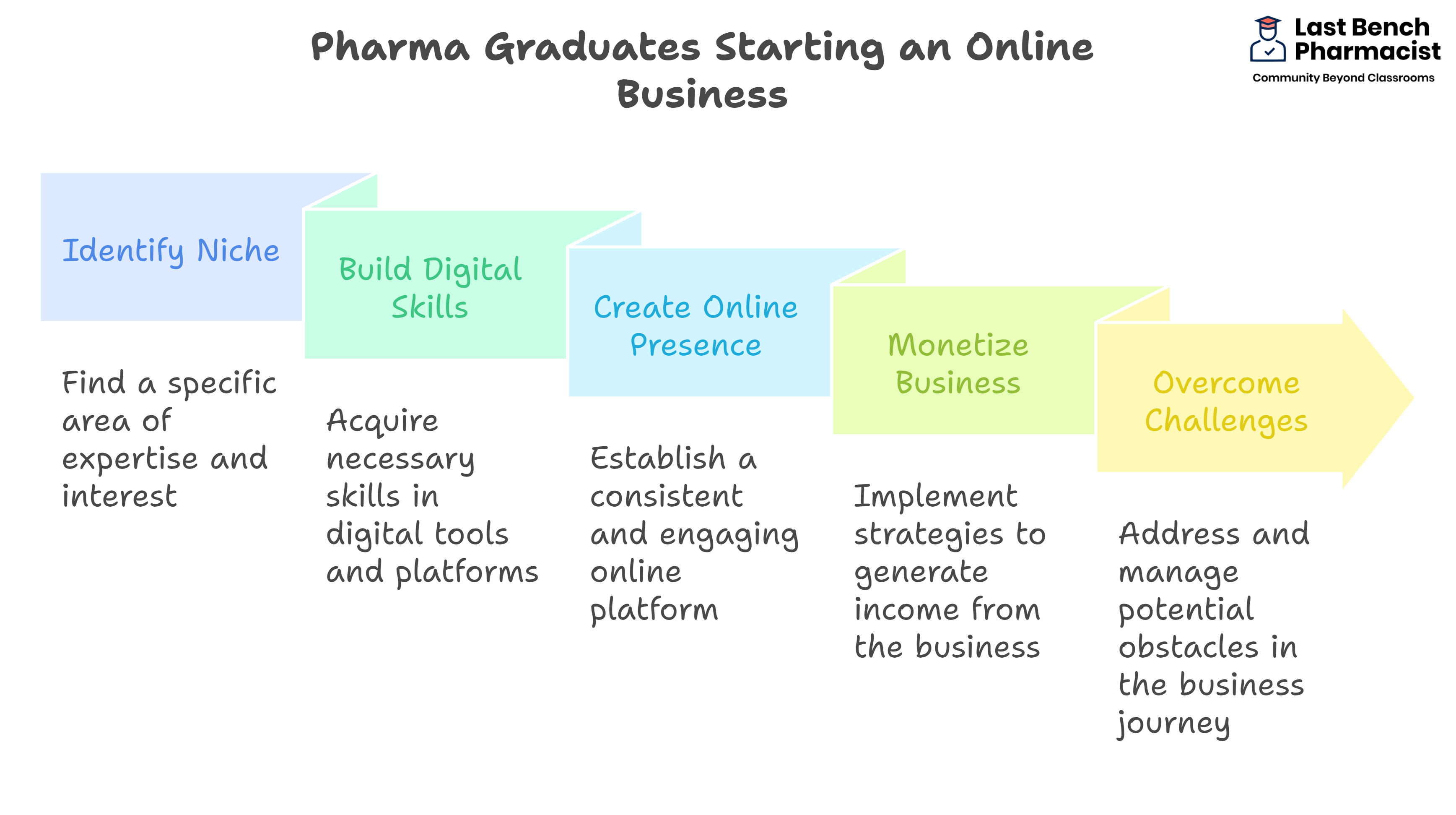
1. Identify Your Niche

Focus on what you’re good at. Are you great at explaining health concepts? Are you passionate about writing or creating videos? Find a niche you enjoy and consider using anΒ ai video generator like invideo to turn your ideas into engaging visual content that stands out.

2. Build Digital Skills

Learn basic skills like:

  • Content writing or video editing
  • SEO and social media marketing
  • Website creation using platforms like WordPress

Recommended learning sites: Coursera, Skillshare, YouTube Creators

3. Create an Online Presence

  • Build a blog or YouTube channel
  • Open Instagram, LinkedIn, or Twitter pages
  • Be consistent with content

4. Monetize Your Business

  • Join affiliate programs
  • Sell digital products or courses
  • Offer services like writing, consultation, or coaching

Challenges to Expect

  • It may take time to gain an audience and earn income.
  • You need to balance scientific accuracy with audience-friendly language.
  • Consistency and learning digital tools are key to long-term success.

Final Thoughts

Pharma graduates can absolutely build a successful online business. Your background in healthcare gives you a unique advantage in creating content, services, or products that genuinely help people. By combining your pharma knowledge with basic digital skills, you can carve out a rewarding and independent career path.

So if you’ve ever felt stuck in the traditional job huntβ€”why not take a step toward becoming a pharma entrepreneur in the digital world?


Want more updates like this?
πŸ‘‰ Follow Last Bench Pharmacist on WhatsApp for job alerts, skill guides, and career tips!

Common Mistakes Pharma Graduates Make in Job Applications


Common Mistakes Pharma Graduates Make in Job Applications

Pharma graduates are armed with incredible scientific knowledge and skills, but when it comes to landing that dream jobβ€”whether in medical writing, research, or beyondβ€”some slip-ups can dim their shine. Don’t worry, though! We’ve got the scoop on the most common mistakes and how to dodge them like a pro. Let’s break it down!


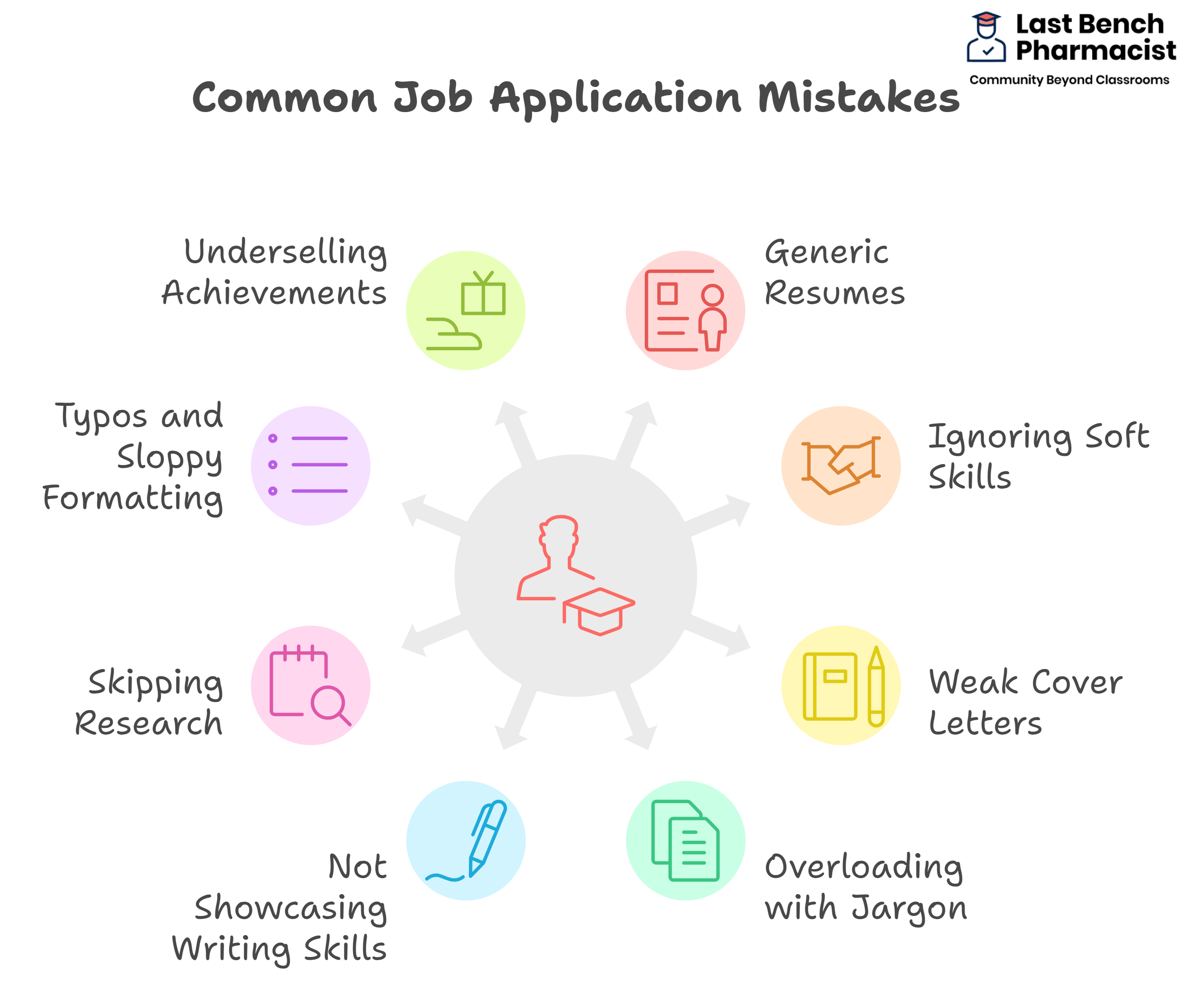
1. Generic Resumes That Scream β€œCopy-Paste” πŸ“„

Pharma grads often send out the same resume for every jobβ€”big mistake! Hiring managers can spot a one-size-fits-all application from a mile away. If you’re applying for a medical writing gig, but your resume only brags about lab skills, you’re missing the mark.

Fix It: Tailor your resume for each role. Highlight relevant skillsβ€”like research, data analysis, or writing experience (even that thesis counts!)β€”and match them to the job description. Show them you’re the fit! βœ…


2. Ignoring Soft Skills 🀝

Pharma grads tend to flex their technical muscles (think pharmacology or clinical trial know-how), but forget to mention soft skills like communication, teamwork, or adaptability. These are gold, especially for roles like medical writing or client-facing pharma jobs!

Fix It: Sprinkle in examplesβ€”did you explain complex science to a group? Lead a project? Add those to your resume or cover letter. Employers want the whole package!


3. Weak Cover Letters (or None at All!) ✍️

Skipping the cover letter or writing a bland one is a rookie move. Pharma grads sometimes think their degree speaks for itselfβ€”not quite! A weak cover letter (or none) leaves your application feeling incomplete.

Fix It: Write a punchy, personalized cover letter. Tell a quick storyβ€”maybe how you aced a research paper or nailed a presentationβ€”and tie it to the job. Keep it short, sweet, and specific. Boom! 🎀


4. Overloading with Jargon πŸ§ͺ

Pharma grads love their science lingo (hello, pharmacokinetics!), but drowning your application in jargon can confuse HR folks who aren’t lab rats. If they don’t get it, they’ll pass.

Fix It: Simplify without dumbing down. For a medical writing role, say β€œI can break down complex drug data for any audience” instead of a word salad of technical terms. Clarity wins!


5. Not Showcasing Writing Skills for Writing Roles βœ’οΈ

Applying for medical writing but not proving you can write? Yikes! Many pharma grads assume their degree covers it, but employers want evidenceβ€”especially for writing-heavy jobs.

Fix It: Include a portfolio link or mention writing projects (e.g., a dissertation, lab report, or even a blog). No experience? Create a sampleβ€”like a mock clinical summaryβ€”and attach it. Show, don’t just tell!


6. Skipping the Research πŸ”

Some grads apply blindly without researching the company or role. Sending a medical writing app to a company that only does sales? Awkward!

Fix It: Dig into the companyβ€”check their website, LinkedIn, or recent news. Mention something specific in your application, like β€œI’m excited to contribute to [Company X]’s innovative clinical trial reports.” It shows you care!


7. Typos and Sloppy Formatting 😬

Nothing screams β€œI didn’t try” like a typo or a messy resume. Pharma grads might be detail-oriented in the lab, but that doesn’t always carry over to applications.

Fix It: Proofread like your life depends on itβ€”twice! Use tools like Grammarly, and keep formatting clean (consistent fonts, bullet points, no walls of text). First impressions matter!


8. Underselling Achievements πŸ†

Pharma grads can be modest to a fault. Did you ace a tough project or win a scholarship? Don’t bury itβ€”or worse, leave it out!

Fix It: Quantify your wins. Instead of β€œworked on a research project,” try β€œanalyzed 50+ data sets for a drug development study, earning top marks.” Numbers pop!


9. Not Networking

Many grads rely solely on online applications and skip networking. Big oops! Pharma is a tight-knit world, and connections can open doors.

Fix It: Hit up LinkedInβ€”message alumni, join groups like AMWA, or attend webinars. A quick β€œHey, I’m a pharma grad interested in medical writingβ€”any tips?” can work wonders.


10. Applying Too Late ⏰

Pharma jobsβ€”especially entry-level onesβ€”fill up fast. Waiting too long or overthinking your app can leave you in the dust.

Fix It: Set a deadline for yourself and apply early. Done is better than perfectβ€”get that app out there!


Final Thoughts

Pharma grads have so much to offer, but these common mistakes can trip you up. The good news? They’re all fixable! Polish that resume, flex those skills, and show employers you’re the total package. You’ve got the scienceβ€”now nail the application game! Ready to land that job? Let’s go!


Can Pharma Graduates Work in Medical Writing?


A Comprehensive Guide

The pharmaceutical industry is buzzing with career options, but one question keeps popping up: Can pharma graduates work in medical writing? The answer? A big YES! πŸŽ‰ Pharma grads aren’t just eligibleβ€”they’re practically made for this role with their science-savvy brains and analytical skills. In this blog, we’ll dive into the opportunities, skills, and steps to kickstart your medical writing journey. Let’s get started!


What Is Medical Writing? πŸ“

Medical writing is all about crafting clear, accurate, and polished content in healthcare and pharma. Think regulatory docs, research papers, or even patient-friendly guides. It’s the art of turning complex science into something everyone can understandβ€”pretty cool, right? 😎

Here’s where you can shine:

  • Regulatory Writing ✍️: Drafting clinical study reports (CSRs) or investigator brochures for big shots like the FDA or EMA.
  • Scientific Writing πŸ”¬: Writing journal articles, abstracts, or research summaries.
  • Medical Communications πŸ“’: Creating promo materials, training guides, or patient education content.

With its science-heavy vibe, medical writing is a dream gig for pharma grads! 🌟


Why Pharma Graduates Are a Perfect Fit for Medical Writing

Pharmacy grads (B.Pharm, M.Pharm, Pharm.D, or Ph.D. holders) bring some serious game to medical writing. Here’s why you’re a natural:

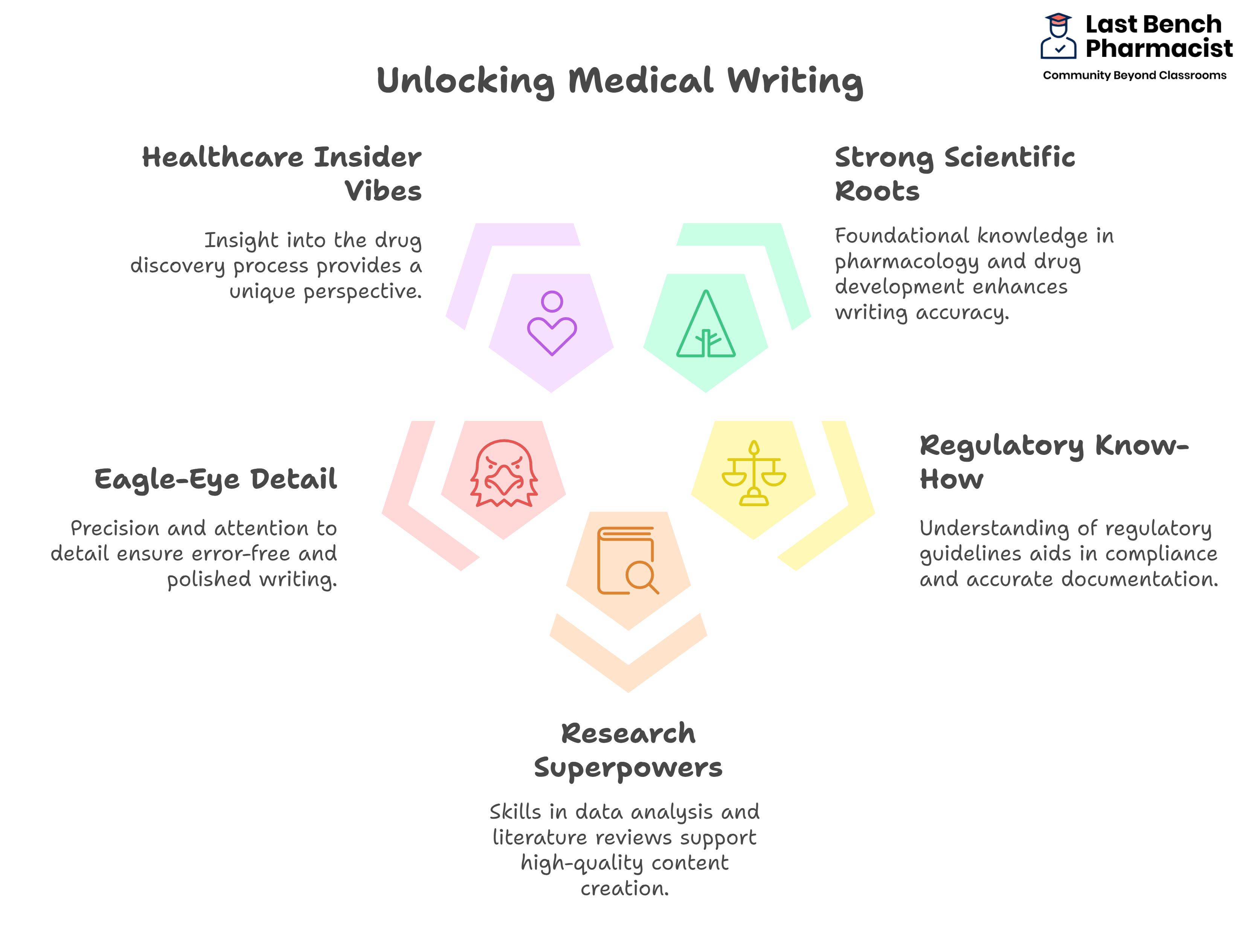
  1. Strong Scientific Roots 🌱
    You’ve got pharmacology, physiology, and drug development down patβ€”perfect for writing about clinical trials or therapies!
  2. Regulatory Know-How πŸ“š
    Your knowledge of GCP, GMP, and guidelines gives you a head start in regulatory writing. Compliance? Nailed it! βœ…
  3. Research Superpowers 🧠
    Literature reviews? Data analysis? You’ve been there, done thatβ€”skills that make medical writing a breeze.
  4. Eagle-Eye Detail πŸ‘€
    Pharmacy taught you precision, and medical writing demands the same. No errors allowed!
  5. Healthcare Insider Vibes πŸ₯
    You get the drug discovery-to-patient-care pipelineβ€”giving you an edge over non-science folks.

Types of Medical Writing Roles for Pharma Grads

Medical writing isn’t one-size-fits-all. Pick your vibe:

  • Regulatory Medical Writer πŸ“‹: Technical docs for submissionsβ€”perfect for data nerds.
  • Scientific Medical Writer πŸ“–: Research papers and conference stuffβ€”ideal for academic souls.
  • Medical Education Writer πŸŽ“: Training materials or CME content for pros.
  • Health Content Writer βœ’οΈ: Blogs or patient guidesβ€”great for simplifying science.
  • Pharma Marketing Writer πŸ“ˆ: Promo goodies like brochures or sales kitsβ€”creative and fun!

Skills Pharma Grads Need for Medical Writing πŸ› οΈ

You’re halfway there, but let’s polish these skills to shine:

  1. Writing Game On Point ✍️
    Clear, concise, and grammatically flawlessβ€”tweak your style for any audience.
  2. Research Ninja πŸ”
    Stay updated with PubMed, clinical trials, and tools like EndNote.
  3. Time Wizard ⏳
    Deadlines don’t scare youβ€”stay organized and deliver!
  4. Adaptability Queen/King πŸ‘‘
    Switch from dense reports to fun blogs like a pro.
  5. Tech Savvy πŸ’»
    Master Word, Acrobat, or platforms like Veeva for bonus points.

How Can Pharma Grads Transition into Medical Writing? πŸšͺ

Ready to jump in? Here’s your roadmap:

  1. Build a Killer Portfolio πŸ“‚
    Write samplesβ€”summarize a study, draft a mock report, or whip up a patient guide.
  2. Level Up with a Course πŸŽ“
    Try AMWA’s Medical Writing Certificate or Udemy crash courses.
  3. Network Like a Boss 🀝
    Join AMWA, EMWA, or LinkedIn groupsβ€”mingle at webinars!
  4. Start Small 🌱
    Freelance, intern, or snag an entry-level gig at CROs or pharma firms.
  5. Resume Glow-Up ✨
    Flaunt your science chops and writing wins (thesis counts!).

Job Outlook and Salary for Medical Writers πŸ’°

Good newsβ€”medical writing is hot! πŸ”₯ Demand’s up thanks to clinical research and healthcare needs. The U.S. Bureau of Labor Statistics says technical writing jobs (like this) will grow 7% by 2029β€”faster than most gigs!

Here’s the paycheck scoop:

  • Entry-Level: $50,000–$70,000/year πŸ’Έ
  • Mid-Level: $80,000–$100,000/year
  • Senior-Level: $120,000+ (hello, regulatory bosses!)

Freelancers? Think $30–$100+/hour depending on your skills. Cha-ching! πŸ€‘


Challenges Pharma Grads Might Face ⚠️

It’s not all smooth sailingβ€”watch out for:

  • Style Switch-Up: Academic jargon won’t cut itβ€”practice audience-friendly writing.
  • Competition: Ph.D.s or seasoned writers might flex harder.
  • Learning Curve: Regulatory rules like ICH-GCP take time to master.

Conclusion: Is Medical Writing Right for You?

yes, pharma grads can rock medical writing! With your science smarts, a sprinkle of training, and a love for words, you’re golden. Whether it’s regulatory docs, research papers, or patient stories, this career blends your skills into something epic. Ready? Sharpen that pen and dive in! ✍️


Follow & JoinΒ Last Bench PharmacistΒ for moreΒ pharma career updates!Β 

What are the most useful IT skills for pharma students?

Most Useful IT Skills for Pharma Students

As the pharmaceutical industry increasingly integrates technology, having IT skills can give pharma students a significant career edge. Here are the most valuable IT skills that can open doors to better job opportunities:


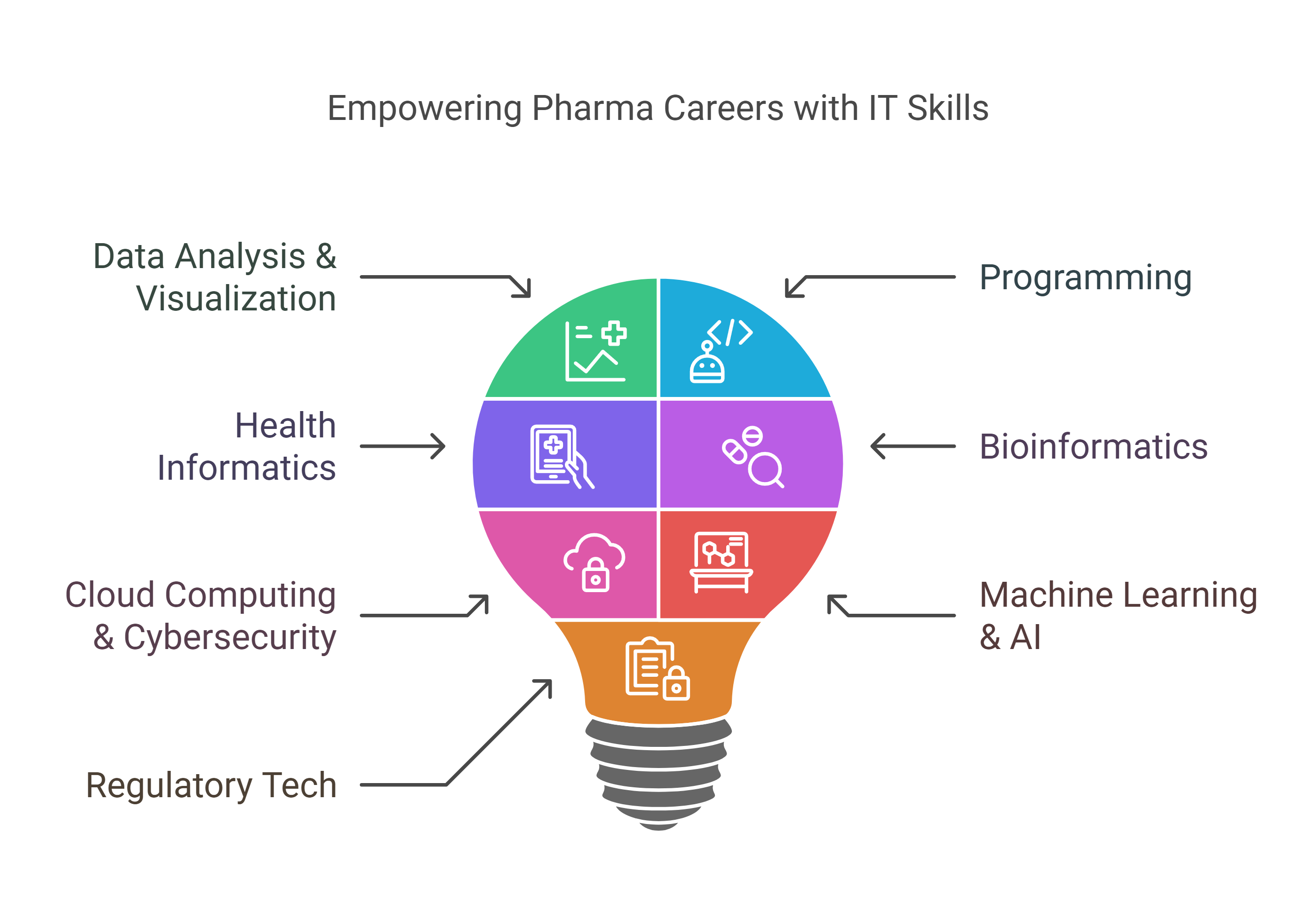
1. Data Analysis & Visualization

πŸ“Œ Why? Pharma companies handle vast amounts of clinical trial and healthcare data. Analyzing and interpreting this data is crucial.
βœ” Tools to Learn:

  • Excel & Google Sheets (Basic data management)
  • SQL (Database queries for structured data)
  • Python (Pandas, NumPy) (Data analysis)
  • Tableau & Power BI (Data visualization)

πŸ”— Learn More: Google Data Analytics Certification


2. Programming (Python & R)

πŸ“ŒCoding is becoming essential in drug research, clinical trials, and AI-driven healthcare solutions.
βœ” Best Languages for Pharma:

  • Python (For machine learning, automation, and data science)
  • R (Preferred in biostatistics and clinical trials)
  • SAS (Used in regulatory submissions and pharmacovigilance)

πŸ”— Learn Python for Free: Python for Data Science by IBM


3. Health Informatics & Electronic Health Records (EHR)

πŸ“Œ Many hospitals and pharma firms use digital patient records, so knowing how to work with EHR systems is a plus.
βœ” What to Learn:

  • EPIC, Cerner, or Meditech (Popular EHR platforms)
  • HL7 & FHIR standards (Healthcare data exchange protocols)

πŸ”— Explore Health Informatics: Introduction to Health IT


4. Bioinformatics & Computational Biology

πŸ“Œ Pharma research relies on computational models to design drugs and analyze biological data.
βœ” Skills Needed:

  • Molecular modeling software (PyMOL, AutoDock)
  • Genomic data analysis (BLAST, Biopython, Bioconductor)

πŸ”— Learn Bioinformatics: Coursera Bioinformatics Course


5. Cloud Computing & Cybersecurity

πŸ“Œ Pharma companies store sensitive clinical trial data in the cloud, requiring security expertise.
βœ” Key Areas to Focus On:

  • AWS, Google Cloud, or Microsoft Azure (For cloud storage & computing)
  • Cybersecurity basics (Data encryption & compliance)

πŸ”— Get Started with AWS: AWS Cloud Practitioner Essentials


6. Machine Learning & AI in Pharma

πŸ“Œ AI is revolutionizing drug discovery, diagnostics, and patient data analysis.
βœ” Beginner-Friendly Tools:

  • TensorFlow & PyTorch (Machine learning frameworks)
  • DeepChem (AI for drug discovery)
  • AutoML (No-code AI platforms)

πŸ”— Intro to AI for Healthcare: AI in Medicine Course


7. Regulatory & Pharmacovigilance Tech

πŸ“Œ Regulatory agencies require pharma companies to use digital compliance systems.
βœ” Important Software to Know:

  • Argus Safety (Pharmacovigilance)
  • Veeva Vault (Regulatory submissions)
  • CTMS (Clinical Trial Management Systems)

πŸ”— Pharmacovigilance Guide: WHO Pharmacovigilance Training


Final Thoughts

β€œPharma + IT is a powerful combination! Learning these tech skills will not only future-proof your career but also open doors to high-paying roles in healthcare technology.”

πŸš€ Which skill interests you the most? Let me know in the comments!


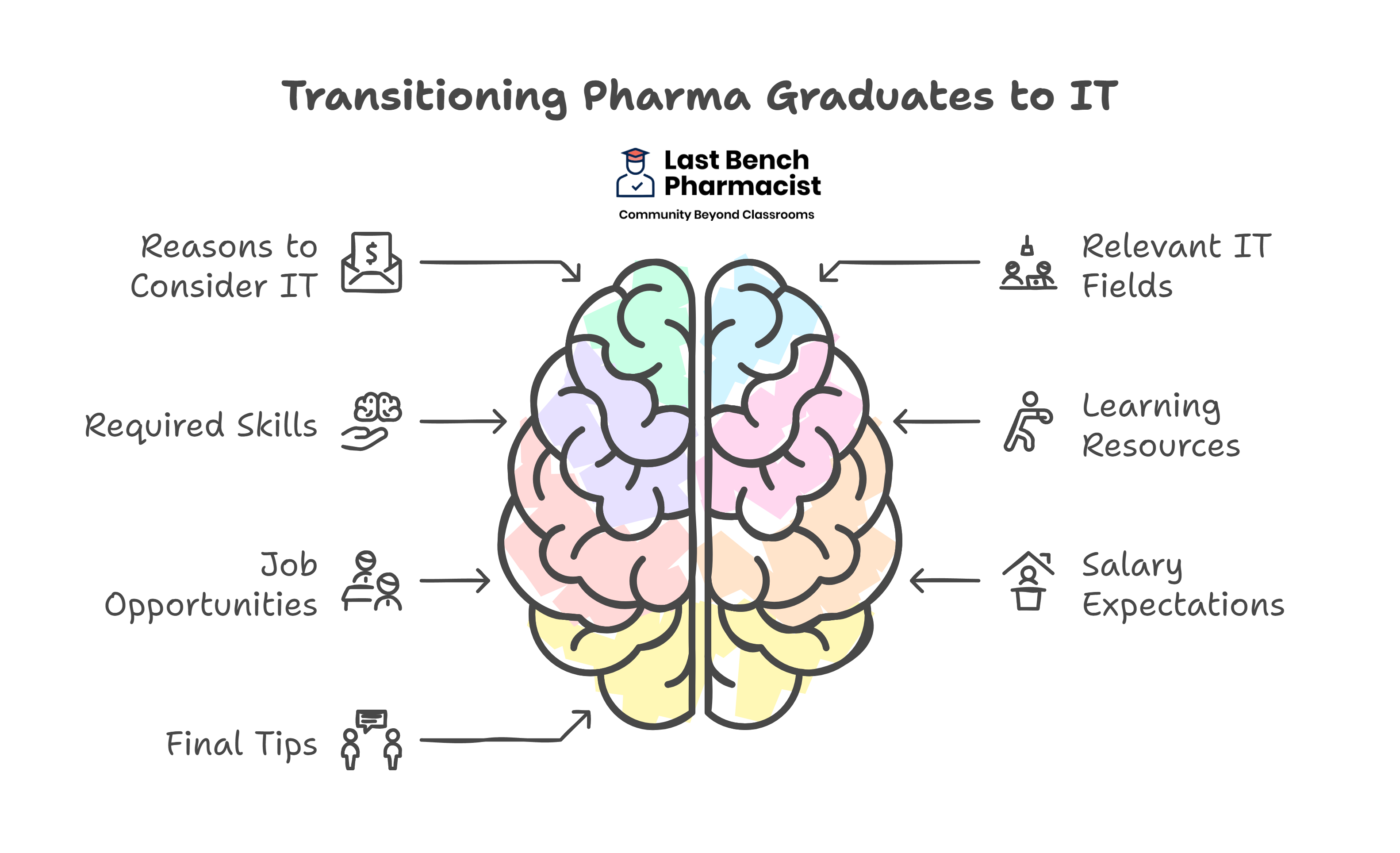
How Can a Pharma Graduate Transition into the IT Industry?

Pharma graduates have a strong foundation in data analysis, research, and healthcare knowledge, which can be leveraged to transition into the IT industry. If you’re looking to shift your career, here’s a structured guide to help you make the move.


1️⃣ Why Should Pharma Graduates Consider IT?

The pharma industry is evolving rapidly, with increasing reliance on technology and data analytics. IT jobs offer:
βœ” Higher salaries compared to traditional pharma roles.
βœ” Remote work opportunities and flexible schedules.
βœ” Diverse career options in AI, data science, and software development.


2️⃣ Best IT Fields for Pharma Graduates

You don’t need to become a software developer! Here are some pharma-relevant IT roles:

πŸ”Ή Health Informatics & Data Science (Read more)

  • Work with electronic health records (EHRs) and healthcare databases.
  • Analyze clinical trial data and patient reports.
  • Tools to learn: SQL, Python, R, SAS.

πŸ”Ή Clinical Research & AI (Read more)

  • AI is transforming drug discovery and clinical trials.
  • Learn machine learning for medical predictions.
  • Courses on TensorFlow & Deep Learning are helpful.

πŸ”Ή Regulatory Technology (RegTech)

  • Automate FDA and EMA compliance processes.
  • Learn GAMP 5, Validation Software, and Risk Management tools.

πŸ”Ή Pharma ERP & SAP (Read more)

  • Learn SAP for pharmaceutical supply chain management.
  • Many pharma IT companies use SAP, Oracle ERP, and Salesforce.

πŸ”Ή Medical Coding & Healthcare IT

  • Work in ICD-10, CPT coding, and insurance billing software.
  • Certification courses available on AHIMA and AAPC.

3️⃣ Skills Required to Move into IT

Here are the most in-demand skills for pharma professionals entering IT:

βœ… Programming & Databases – Python, SQL, R.
βœ… AI & Machine Learning – Basics of TensorFlow, NLP.
βœ… Clinical Data Management – CDISC, SAS, and healthcare databases.
βœ… Cloud Computing & Security – AWS, Azure for pharma IT solutions.
βœ… Electronic Health Records (EHR) – Epic Systems, Cerner.

πŸ’‘ Pro Tip: Start by learning Python & SQL for data analytics in pharma!


4️⃣ How to Learn IT Skills (Best Resources)

You don’t need a second degree! Here’s how to upskill efficiently:

πŸ“Œ Online Courses & Certifications:

πŸ“Œ Certifications:

  • Google Data Analytics Certificate
  • Certified Health Informatics Specialist (CHIS)
  • AWS Cloud Practitioner for Healthcare

πŸ“Œ Freelance & Internship Opportunities

  • Work on medical data analytics projects.
  • Join open-source projects in health AI and clinical research tech.

5️⃣ Job Opportunities & Where to Apply

After learning these skills, apply for pharma IT roles at:

πŸ”Ή Top Pharma IT Companies – IQVIA, Medidata, PPD.
πŸ”Ή HealthTech Startups – Babylon Health, Flatiron, Tempus.
πŸ”Ή Hospital IT Departments – AI-driven diagnostics, EHR.
πŸ”Ή Regulatory & Compliance Tech – Work with FDA and EMA.

πŸ“Œ Job Portals:


6️⃣ Salary Expectations in Pharma IT

πŸ’° Entry-Level: β‚Ή4 – 8 LPA ($5,000 – $10,000 per year)
πŸ’° After 5 Years: β‚Ή10 – 25 LPA ($15,000 – $30,000 per year)
πŸ’° Senior Level: β‚Ή30+ LPA ($40,000+ per year)

πŸ’‘ Growth Tip: Specializing in AI, Data Science, or Cloud Computing can boost your salary significantly!


7️⃣ Final Tips for a Successful Transition

βœ” Start learning IT skills today – Python, SQL, Cloud Computing.
βœ” Network with pharma IT professionals on LinkedIn.
βœ” Apply for pharma-tech internships to gain experience.
βœ” Get certified in health informatics and data analytics.
βœ” Keep upgrading your skills – AI, ML, cybersecurity, and automation.

πŸš€ Pharma + IT = Future-Proof Career! Ready to make the switch? Comment β€˜IT’ below if you’re excited!

πŸ‘‰ Follow & Join Last Bench Pharmacist for more pharma career updates! πŸ’ŠπŸ’»

Please Note :

Salary details are based on data from Last Bench Pharmacists at the time of writing and may vary depending on the employer, candidate’s experience, qualifications, and location.

Please note that the companies mentioned in this article are not affiliated with Last Bench Pharmacists

How Pharma Graduates Can Start a Freelancing Career

Pharma graduates don’t have to stick to traditional jobs. With digital transformation in healthcare, freelancing opportunities are booming! If you have expertise in medical writing, regulatory affairs, clinical research, or digital health, you can start earning online. Here’s how!


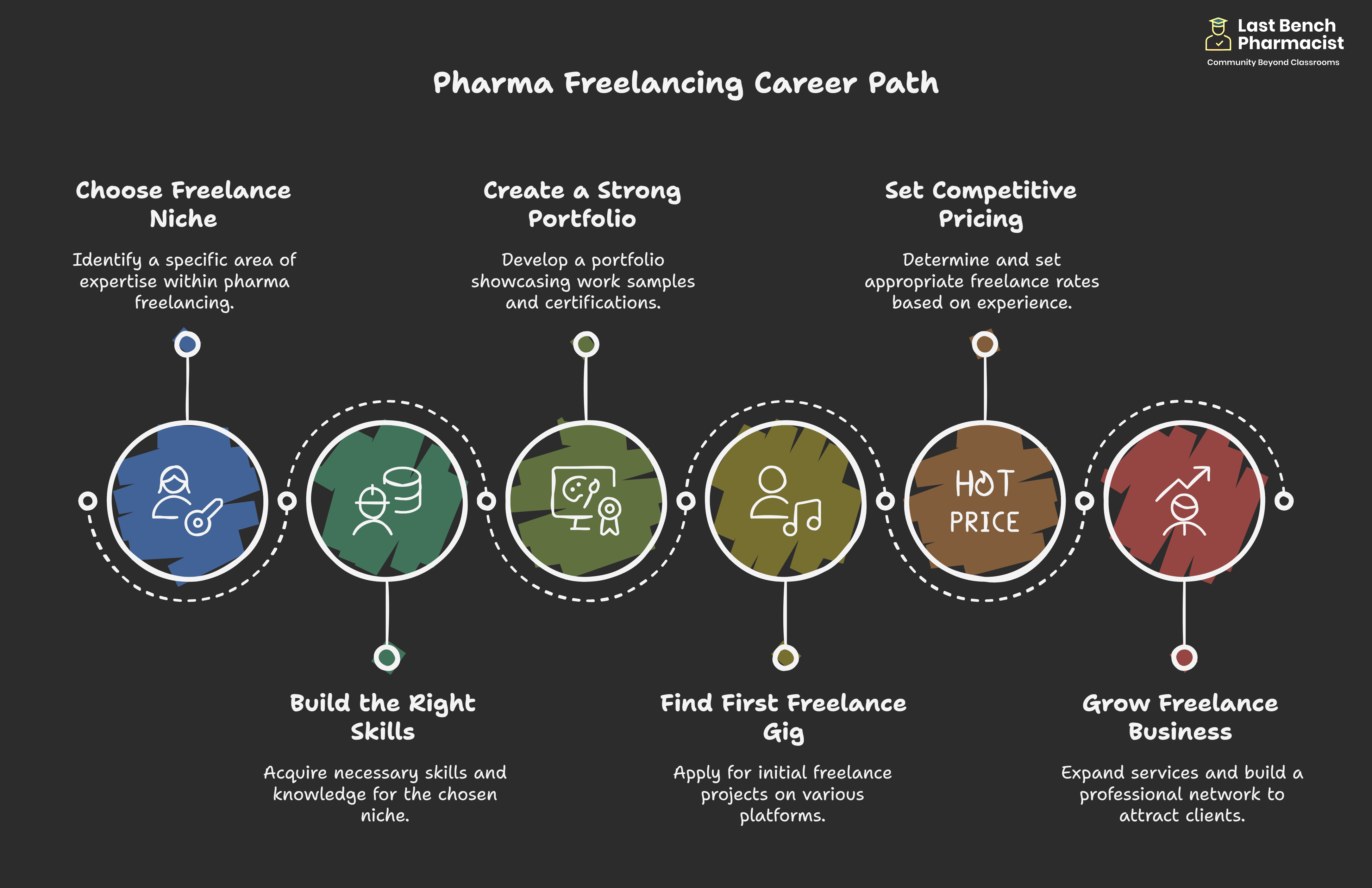
1️⃣ Choose Your Freelance Niche

Before jumping in, pick a niche where your pharma knowledge is valuable. Some popular options include:

πŸ“Œ Medical Writing – Creating scientific articles, regulatory documents, or healthcare blogs.
πŸ“Œ Regulatory Consulting – Helping pharmaceutical companies with compliance and documentation.
πŸ“Œ Clinical Data Analysis – Working on data-driven research projects.
πŸ“Œ Pharma Digital Marketing – Promoting pharma products, SEO, and content writing.
πŸ“Œ Medical Transcription – Converting doctor’s voice recordings into written documents.

πŸ”— Find freelance projects here: Upwork, Freelancer


2️⃣ Build the Right Skills

To stand out, pharma graduates need some additional skills:

βœ… Medical Writing: Learn research-based writing, regulatory requirements.
βœ… Data Analysis: Master Excel, Python, R, and SQL for clinical data projects.
βœ… SEO & Content Writing: Get skilled in Google SEO, keyword research, and health blogging.
βœ… Regulatory Knowledge: Stay updated with FDA, EMA, and other global compliance standards.

πŸ”— Upgrade your skills with online courses: Coursera, Udemy


3️⃣ Create a Strong Portfolio

πŸ“Œ Your portfolio is key to getting freelance gigs. Build:

βœ” Sample medical articles or regulatory documents.
βœ” A personal website or LinkedIn profile showcasing your expertise.
βœ” Certifications in medical writing, regulatory affairs, or data analytics.

πŸ”— Create your own website here: Wix


4️⃣ Find Your First Freelance Gig

Start by applying to projects on freelancing platforms. Here’s where to look:

πŸ“ Medical Writing Jobs: Cactus Communications, ProBlogger
πŸ“Š Clinical Data & Research Jobs: PeoplePerHour
πŸ“’ Pharma Marketing Jobs: Fiverr

πŸ’‘ Tip: Start small, build client reviews, and increase your rates as you gain experience.


5️⃣ Set Competitive Pricing

Freelance rates vary based on experience. Here’s a rough estimate:

πŸ“Œ Beginner: β‚Ή500 – β‚Ή1,500 per article (Medical Writing)
πŸ“Œ Experienced: β‚Ή2,000 – β‚Ή5,000 per article
πŸ“Œ Regulatory/Clinical Research Consulting: β‚Ή1,500 – β‚Ή5,000 per hour

πŸ”— Check global freelance rates: PayScale


6️⃣ Grow Your Freelance Business

πŸš€ Once you have steady projects, focus on:

βœ… Building a strong LinkedIn network to attract pharma clients.
βœ… Creating an Upwork or Fiverr profile with high ratings.
βœ… Expanding into multiple services like SEO, consulting, or digital health projects.

πŸ”— Network with pharma professionals: LinkedIn


7️⃣ Final Takeaway

Pharma freelancing is a great way to earn, learn, and work flexibly! Whether you’re into writing, consulting, or data analysis, you can start today with the right skills and platforms.

πŸ’¬ Want more freelancing tips? Comment β€œFREELANCE” & Join the Last Bench Pharmacist WhatsApp Group!

πŸš€ Like & Share this guide to help more pharma professionals go digital!

How Pharma Graduates Can Build a Tech-Friendly Resume

The pharmaceutical industry is evolving, with digital health, AI-driven research, and data analytics becoming essential. If you’re a pharma graduate looking to transition into tech-related roles, having a tech-friendly resume is crucial. Here’s a step-by-step guide to crafting a resume that highlights both pharma expertise and tech skills effectively.


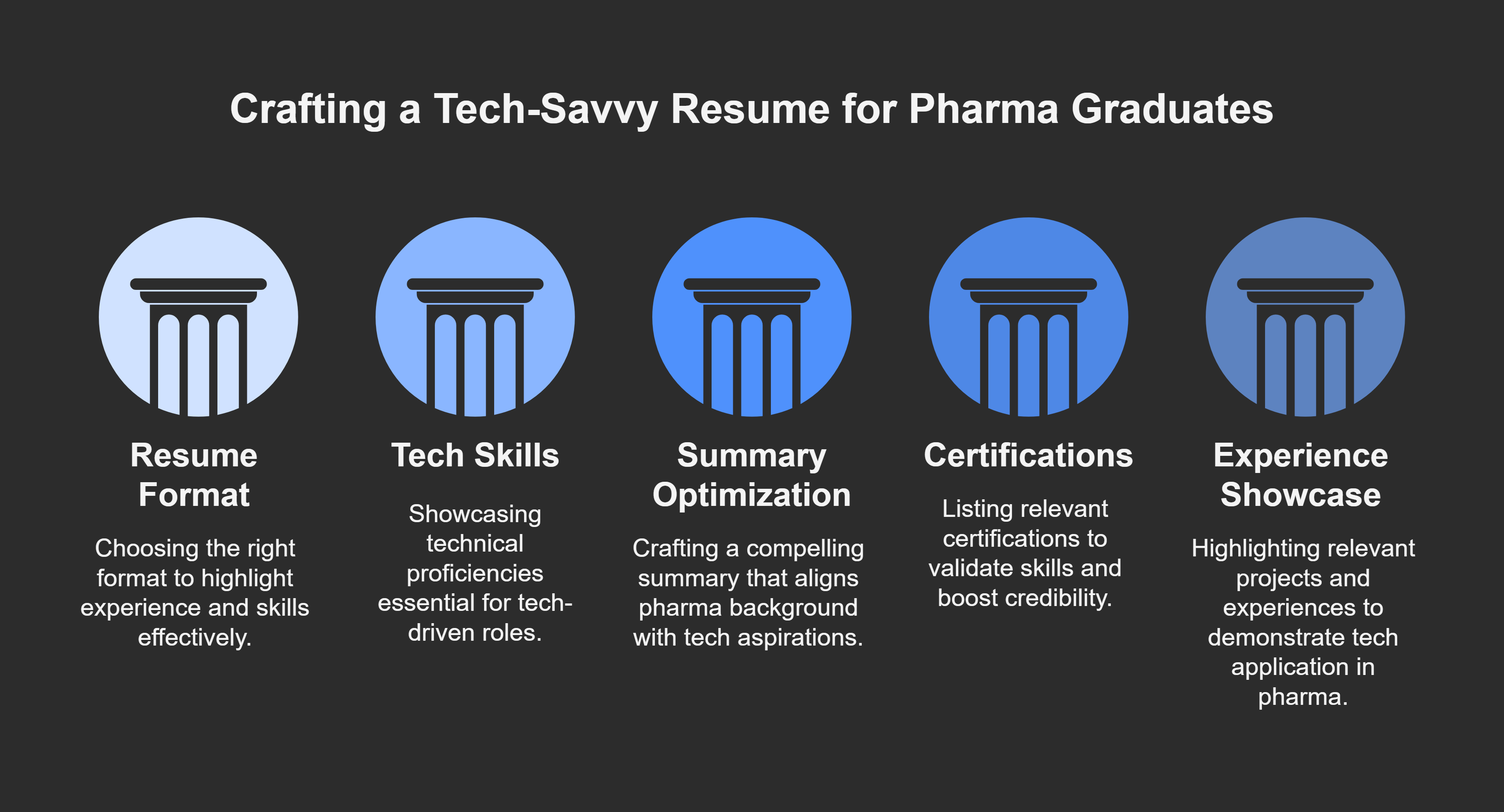
1. Choose the Right Resume Format

A reverse-chronological format works best, placing the most recent experience at the top. However, if you’re shifting careers, a functional format (focused on skills rather than experience) may be better.

πŸ”Ή Reverse-Chronological Resume – Best for those with relevant experience.
πŸ”Ή Functional Resume – Ideal for career changers, emphasizing transferable skills.

πŸ“Œ Learn More: Best Resume Formats


2. Highlight Key Tech Skills

Pharma graduates must showcase technical proficiencies to stand out in tech-driven roles like health informatics, digital marketing, or data analytics.

πŸ”Ή Programming & Data Skills: Python, SQL, R, Excel
πŸ”Ή Tech Tools: Power BI, Tableau, MATLAB
πŸ”Ή Healthcare Tech: Electronic Health Records (EHR), Clinical Data Management (CDM)
πŸ”Ή Digital Marketing: SEO, Google Analytics, Content Writing

πŸ“Œ Learn More: Top Tech Skills for Pharma Professionals


3. Optimize the Summary Section

Your summary should clearly state your pharma background and tech aspirations.

✍️ Example:
πŸš€ Pharmacy graduate with expertise in clinical research and a strong foundation in Python for data analysis. Passionate about leveraging technology in healthcare to improve patient outcomes. Skilled in SQL, Power BI, and regulatory data management.

πŸ“Œ Learn More: How to Write a Resume Summary


4. List Certifications & Online Courses

Tech certifications can validate your skills and boost credibility.

πŸ”Ή Healthcare Tech: Health Informatics (Coursera), EHR Certifications
πŸ”Ή Data Analytics: Google Data Analytics (Coursera), IBM Data Science
πŸ”Ή Programming: Python for Beginners (Udemy), SQL for Data Science

πŸ“Œ Learn More: Best Online Courses for Tech Skills


5. Showcase Relevant Experience

Even if you don’t have a tech job yet, highlight projects where you used technology in pharma settings.

πŸ”Ή Clinical Data Analysis – Using Excel/Python for drug trials
πŸ”Ή Regulatory Documentation – Managing compliance reports in electronic systems
πŸ”Ή Medical Writing – Creating content for healthcare blogs/websites
πŸ”Ή Digital Marketing – Running SEO campaigns for pharma companies

πŸ“Œ Learn More: How to Gain Experience Without a Tech Job


6. Use Keywords for ATS Optimization

Most employers use Applicant Tracking Systems (ATS) to filter resumes. Ensure your resume has the right keywords.

πŸ”Ή β€œPharmacy graduate with expertise in Python, SQL, clinical research, and data analytics”
πŸ”Ή β€œExperienced in regulatory affairs, health informatics, and medical writing with digital marketing skills.”

πŸ“Œ Learn More: How to Pass an ATS Resume Scan


7. Add a Strong Portfolio & LinkedIn Profile

Create a GitHub portfolio (for coding projects) or a personal website showcasing your work.

πŸ”Ή GitHub – Upload Python, SQL, or data visualization projects
πŸ”Ή Medium/LinkedIn Articles – Write about pharma-tech trends
πŸ”Ή Personal Website – Showcase certifications, blogs, and projects

πŸ“Œ Learn More: How to Build an Online Portfolio


Final Thoughts

A tech-friendly resume bridges the gap between pharma knowledge and tech expertise. Focus on relevant skills, projects, and certifications to stand out in the digital healthcare industry.

πŸ“’ Need a Resume Review? Comment β€œResume Help” & Join Our Last Bench Pharmacist WhatsApp Community for personalized career guidance! πŸš€

What is health informatics, and how can pharma graduates work in this field?

What is Health Informatics, and How Can Pharma Graduates Work in This Field?

The healthcare industry is rapidly evolving, and Health Informatics is at the forefront of this transformation. It combines healthcare, information technology, and data analytics to improve patient care and medical decision-making. For pharma graduates, this field offers exciting career opportunities beyond traditional pharmaceutical roles.


What is Health Informatics?

Learn More About Health Informatics

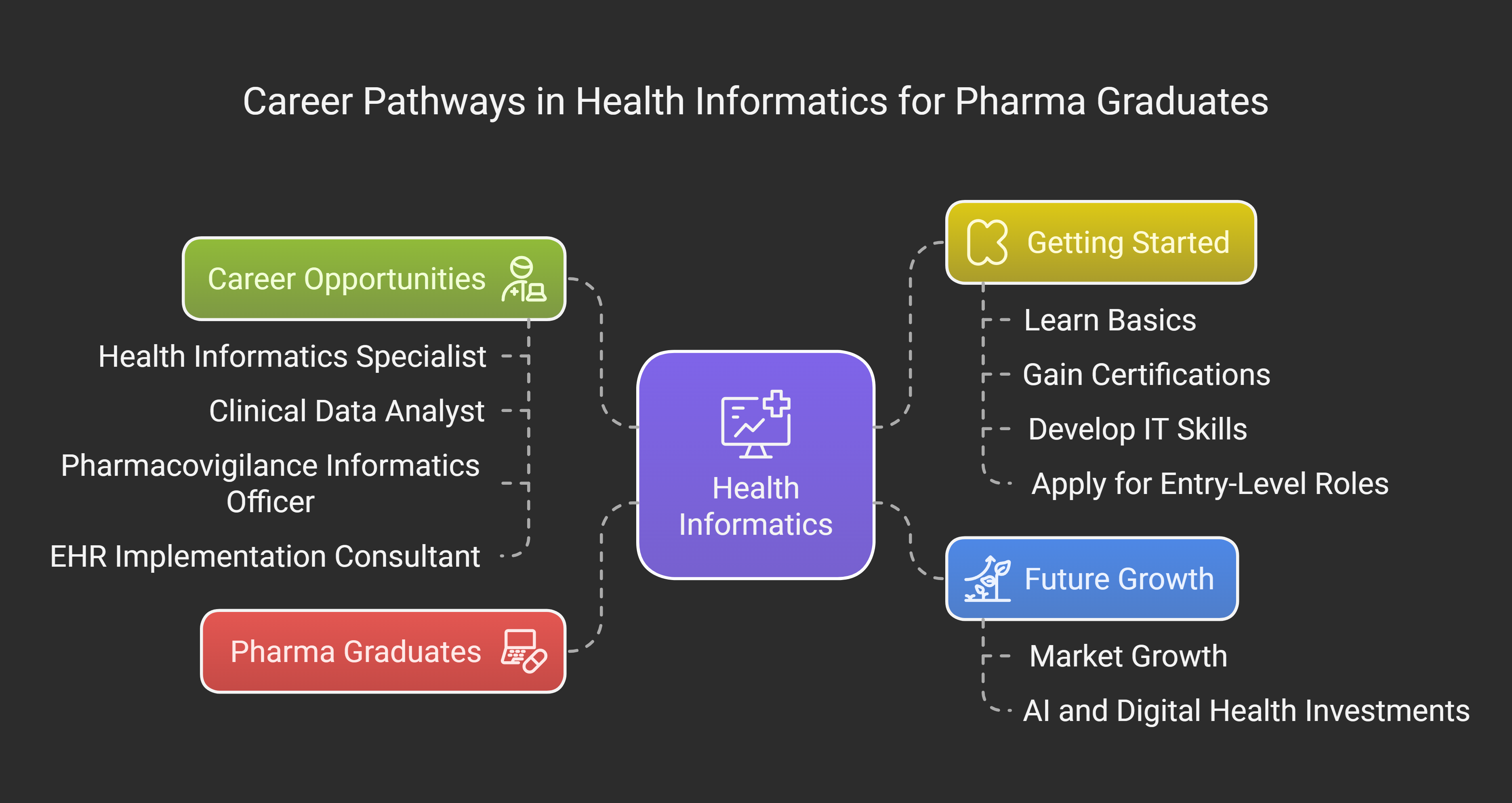
Health Informatics is the interdisciplinary field that deals with the acquisition, storage, retrieval, and use of healthcare data to enhance patient care and streamline hospital operations. It includes:

  • Electronic Health Records (EHRs): Digital storage of patient information
  • Clinical Decision Support Systems (CDSS): AI-driven tools to assist doctors
  • Telemedicine & mHealth: Digital platforms for remote healthcare
  • Pharmacovigilance & Drug Safety: Monitoring adverse drug reactions through databases

Why Should Pharma Graduates Consider Health Informatics?

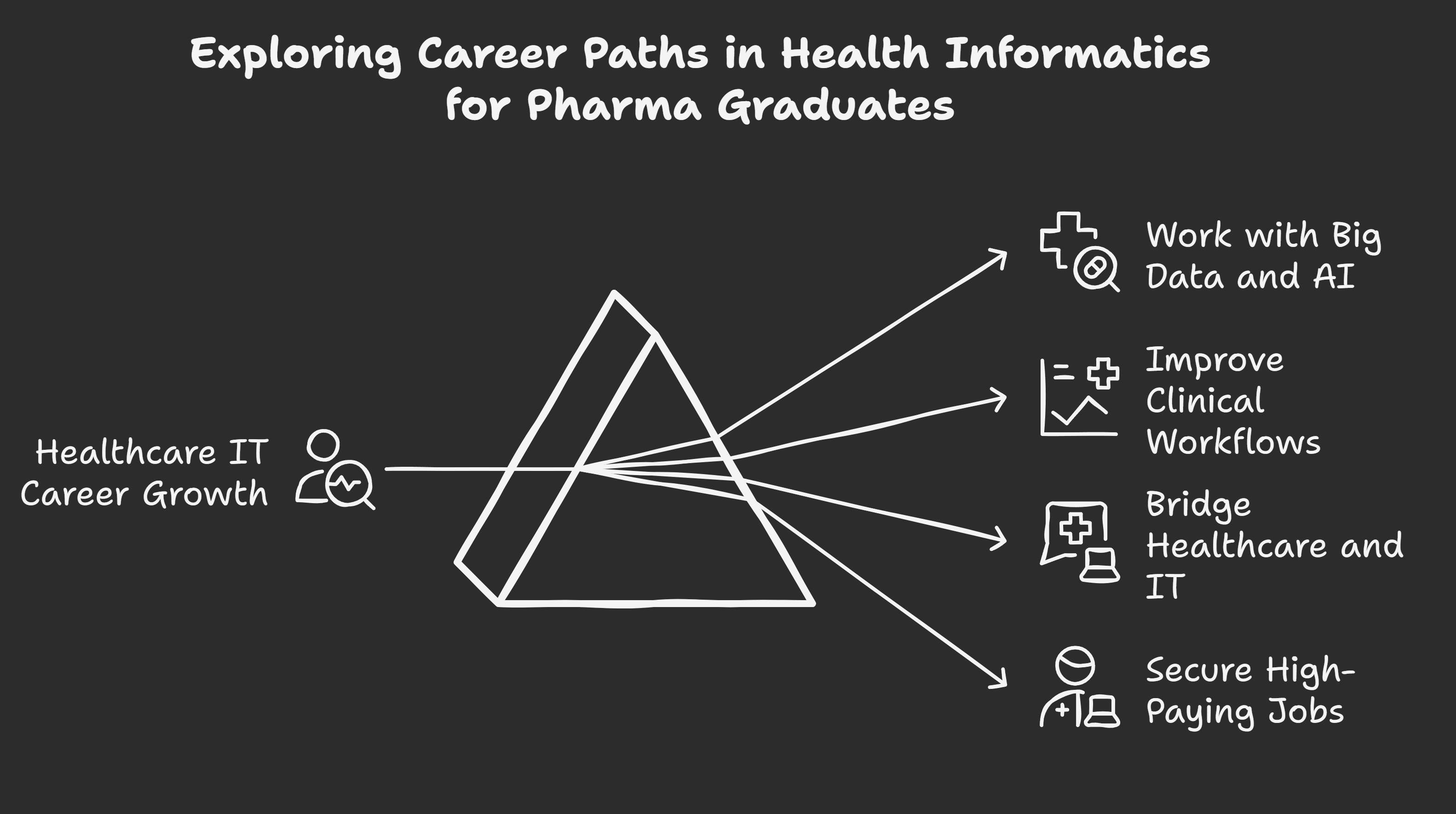
Healthcare IT Career Growth

Pharma graduates already possess a strong foundation in medical knowledge and data analysis. By transitioning into health informatics, they can:

  • Work with big data and AI to improve drug safety
  • Improve clinical workflows through data-driven decisions
  • Bridge the gap between healthcare providers and IT teams
  • Secure high-paying, future-proof jobs in the growing digital healthcare industry

Career Opportunities in Health Informatics for Pharma Graduates

Health Informatics Job Roles

  1. Clinical Data Analyst
    • Role: Analyzing healthcare data to improve patient outcomes
    • Required Skills: SQL, Python, and statistical analysis
    • Salary Range: β‚Ή5-10 LPA
  2. Health Informatics Specialist
    • Role: Managing digital patient records and data security
    • Required Skills: Knowledge of EHR systems, data analytics, compliance regulations
    • Salary Range: β‚Ή6-12 LPA
  3. Pharmacovigilance Informatics Officer
    • Role: Using AI to track drug side effects
    • Required Skills: Adverse event reporting, regulatory compliance
    • Salary Range: β‚Ή7-15 LPA
  4. EHR Implementation Consultant
    • Role: Implementing and managing Electronic Health Records
    • Required Skills: IT project management, healthcare compliance knowledge
    • Salary Range: β‚Ή6-12 LPA

How to Get Started in Health Informatics?

Best Online Courses for Health Informatics

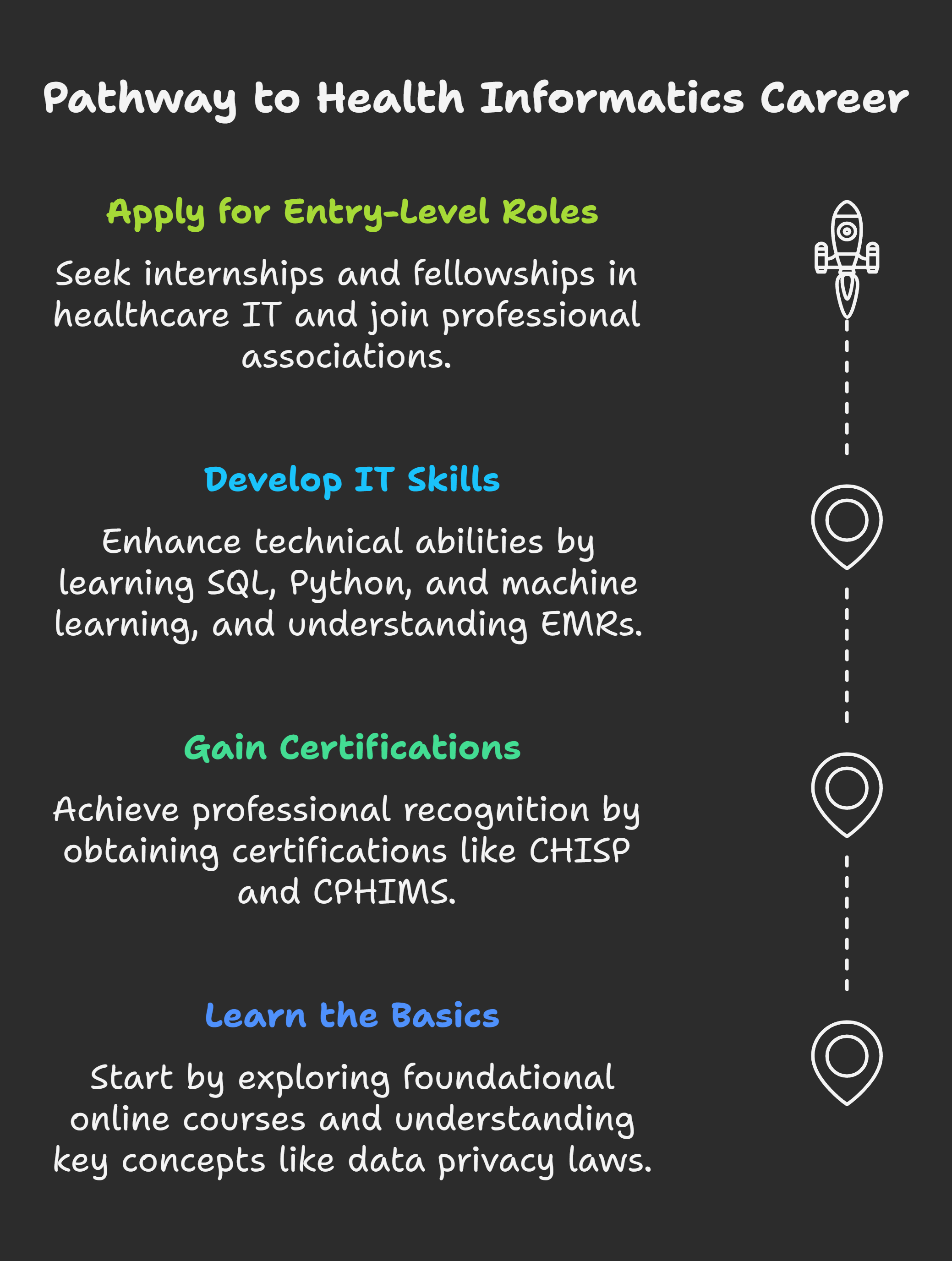
  1. Learn the Basics
    • Explore online courses in Health Informatics
    • Study key concepts like data privacy laws (HIPAA, GDPR)
  2. Gain Certifications
    • Certified Health Informatics Systems Professional (CHISP)
    • Certified Professional in Healthcare Information and Management Systems (CPHIMS)
  3. Develop IT Skills
    • Learn SQL, Python, and Machine Learning
    • Understand Electronic Medical Records (EMRs)
  4. Apply for Entry-Level Roles
    • Look for internships and fellowships in healthcare IT firms
    • Join professional health informatics associations

Future Growth of Health Informatics

Healthcare IT Market Growth Statistics

  • The global health informatics market is expected to grow at 12.5% CAGR by 2030
  • Increased demand for AI-driven diagnostics and drug development
  • Pharma companies are heavily investing in digital health

Final Thoughts

Health Informatics is an exciting and high-growth field that allows pharma graduates to leverage their medical knowledge while embracing data-driven healthcare solutions. If you are passionate about technology, data, and patient care, this career path offers financially rewarding and future-proof opportunities.

πŸš€ Follow Last Bench Pharmacist for More Career Updates! πŸš€
Join our WhatsApp community for job updates and exclusive career tips.