

A Comprehensive Guide
The pharmaceutical industry is buzzing with career options, but one question keeps popping up: Can pharma graduates work in medical writing? The answer? A big YES! 🎉 Pharma grads aren’t just eligible—they’re practically made for this role with their science-savvy brains and analytical skills. In this blog, we’ll dive into the opportunities, skills, and steps to kickstart your medical writing journey. Let’s get started!

What Is Medical Writing? 📝
Medical writing is all about crafting clear, accurate, and polished content in healthcare and pharma. Think regulatory docs, research papers, or even patient-friendly guides. It’s the art of turning complex science into something everyone can understand—pretty cool, right? 😎
Here’s where you can shine:
- Regulatory Writing ✍️: Drafting clinical study reports (CSRs) or investigator brochures for big shots like the FDA or EMA.
- Scientific Writing 🔬: Writing journal articles, abstracts, or research summaries.
- Medical Communications 📢: Creating promo materials, training guides, or patient education content.
With its science-heavy vibe, medical writing is a dream gig for pharma grads! 🌟
Why Pharma Graduates Are a Perfect Fit for Medical Writing
Pharmacy grads (B.Pharm, M.Pharm, Pharm.D, or Ph.D. holders) bring some serious game to medical writing. Here’s why you’re a natural:
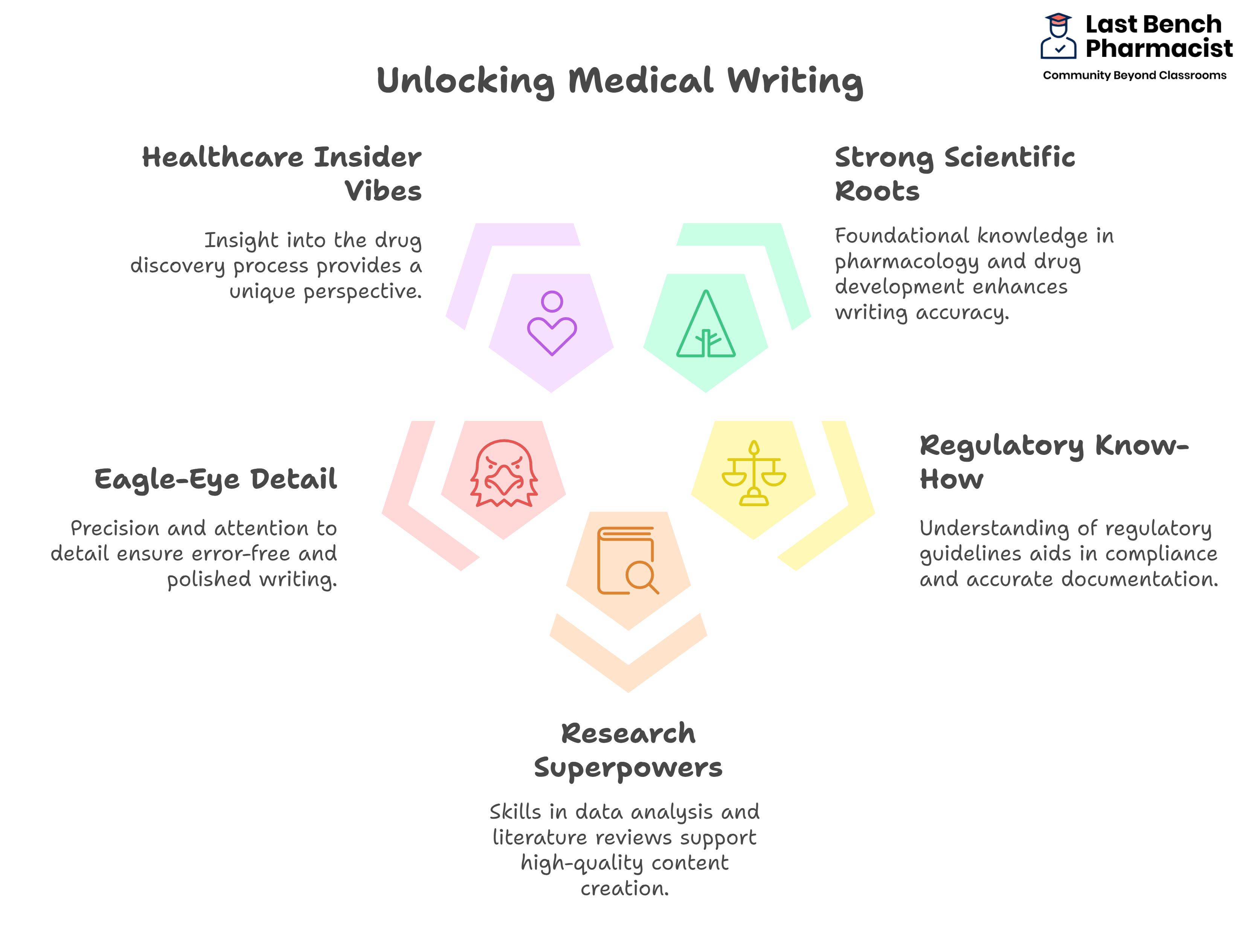
- Strong Scientific Roots 🌱
You’ve got pharmacology, physiology, and drug development down pat—perfect for writing about clinical trials or therapies! - Regulatory Know-How 📚
Your knowledge of GCP, GMP, and guidelines gives you a head start in regulatory writing. Compliance? Nailed it! ✅ - Research Superpowers 🧠
Literature reviews? Data analysis? You’ve been there, done that—skills that make medical writing a breeze. - Eagle-Eye Detail 👀
Pharmacy taught you precision, and medical writing demands the same. No errors allowed! - Healthcare Insider Vibes 🏥
You get the drug discovery-to-patient-care pipeline—giving you an edge over non-science folks.
Types of Medical Writing Roles for Pharma Grads
Medical writing isn’t one-size-fits-all. Pick your vibe:
- Regulatory Medical Writer 📋: Technical docs for submissions—perfect for data nerds.
- Scientific Medical Writer 📖: Research papers and conference stuff—ideal for academic souls.
- Medical Education Writer 🎓: Training materials or CME content for pros.
- Health Content Writer ✒️: Blogs or patient guides—great for simplifying science.
- Pharma Marketing Writer 📈: Promo goodies like brochures or sales kits—creative and fun!
Skills Pharma Grads Need for Medical Writing 🛠️
You’re halfway there, but let’s polish these skills to shine:
- Writing Game On Point ✍️
Clear, concise, and grammatically flawless—tweak your style for any audience. - Research Ninja 🔍
Stay updated with PubMed, clinical trials, and tools like EndNote. - Time Wizard ⏳
Deadlines don’t scare you—stay organized and deliver! - Adaptability Queen/King 👑
Switch from dense reports to fun blogs like a pro. - Tech Savvy 💻
Master Word, Acrobat, or platforms like Veeva for bonus points.
How Can Pharma Grads Transition into Medical Writing? 🚪
Ready to jump in? Here’s your roadmap:
- Build a Killer Portfolio 📂
Write samples—summarize a study, draft a mock report, or whip up a patient guide. - Level Up with a Course 🎓
Try AMWA’s Medical Writing Certificate or Udemy crash courses. - Network Like a Boss 🤝
Join AMWA, EMWA, or LinkedIn groups—mingle at webinars! - Start Small 🌱
Freelance, intern, or snag an entry-level gig at CROs or pharma firms. - Resume Glow-Up ✨
Flaunt your science chops and writing wins (thesis counts!).
Job Outlook and Salary for Medical Writers 💰
Good news—medical writing is hot! 🔥 Demand’s up thanks to clinical research and healthcare needs. The U.S. Bureau of Labor Statistics says technical writing jobs (like this) will grow 7% by 2029—faster than most gigs!
Here’s the paycheck scoop:
- Entry-Level: $50,000–$70,000/year 💸
- Mid-Level: $80,000–$100,000/year
- Senior-Level: $120,000+ (hello, regulatory bosses!)
Freelancers? Think $30–$100+/hour depending on your skills. Cha-ching! 🤑
Challenges Pharma Grads Might Face ⚠️
It’s not all smooth sailing—watch out for:
- Style Switch-Up: Academic jargon won’t cut it—practice audience-friendly writing.
- Competition: Ph.D.s or seasoned writers might flex harder.
- Learning Curve: Regulatory rules like ICH-GCP take time to master.
Conclusion: Is Medical Writing Right for You?
yes, pharma grads can rock medical writing! With your science smarts, a sprinkle of training, and a love for words, you’re golden. Whether it’s regulatory docs, research papers, or patient stories, this career blends your skills into something epic. Ready? Sharpen that pen and dive in! ✍️