Top 8 Skills Pharma Graduate Learn for Better Job Opportunities


Top 8 Skills Pharma Graduate Learn for Better Job Opportunities

In today’s competitive job market, https://in.indeed.com/career-advice/resumes-cover-letters/basic-computer-skillsa degree alone isn’t always enough. As a pharma graduate, gaining additional skills can open doors to exciting and better-paying opportunities—both within and beyond the pharmaceutical industry.

Let’s break down the most important skills you should consider learning to stand out and succeed.

1. Basic IT and Computer Skills

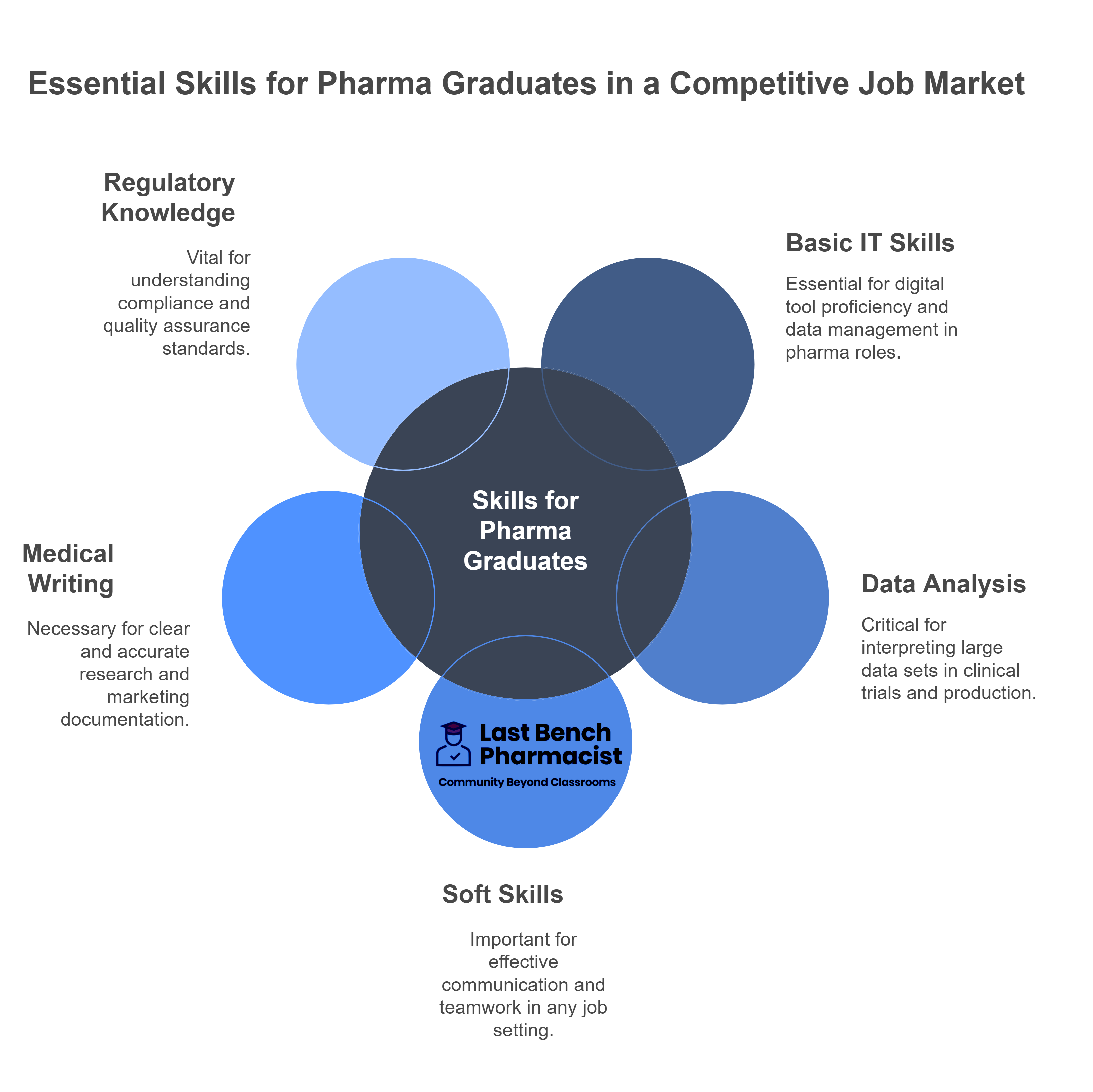
Why it matters: Most pharma roles today involve digital tools, data entry, or online platforms.

Skills to learn:

  • Microsoft Excel (for data entry and analysis)
  • PowerPoint (for presentations)
  • Basic troubleshooting and digital literacy
  • Google Workspace

👉 Free Google Workspace Training


2. Data Analysis and Interpretation

Why it matters: Pharma industries deal with massive amounts of data—from clinical trials to production.

Skills to learn:

  • Excel (Advanced)
  • Power BI / Tableau
  • Python or R (basic data analysis)

👉 Free Data Analysis Course – Coursera


3. Soft Skills

Why it matters: Communication, teamwork, and problem-solving are key in any job.

Skills to improve:

  • Public speaking
  • Report writing
  • Team collaboration
  • Time management

👉 Effective Communication – edX


4. Medical Writing & Documentation

Why it matters: Pharma companies often need clear and accurate documentation for research, trials, and marketing.

Skills to learn:

  • Scientific writing
  • Regulatory documentation
  • Grammar and proofreading

👉 Learn Medical Writing – Udemy


5. Regulatory Affairs Knowledge

Why it matters: Understanding regulatory frameworks like FDA, ICH, and CDSCO is vital for many roles.

Skills to learn:

  • Drug approval process
  • Compliance documentation
  • Quality assurance standards

👉 Intro to Regulatory Affairs – PharmaLessons


6. Digital Marketing (for Pharma Products)

Why it matters: With the rise of e-pharmacies, pharma graduates with digital marketing knowledge can stand out.

Skills to learn:

  • SEO & SEM
  • Content marketing
  • Email campaigns
  • Social media promotions

👉 Google Digital Garage – Free Course


7. Industry-Specific Software

Why it matters: Many companies use specific software tools for compliance and documentation.

Tools to explore:

  • LIMS (Laboratory Information Management Systems)
  • SAP
  • Veeva Systems

8. Clinical Research Basics

Why it matters: Roles in clinical trials and research require knowledge of clinical processes and ethics.

Skills to learn:

  • Clinical trial phases
  • GCP (Good Clinical Practices)
  • Ethics in human studies

👉 NIH GCP Training (Free)


Final Thoughts

Pharma graduates who combine their degree with tech, communication, and data-driven skills are more likely to land jobs in clinical research, regulatory affairs, medical writing, data analysis, and even IT-related pharma roles.

Tip: Focus on one skill at a time. Start small, practice daily, and keep building.


Need Daily Job Alerts and Skill Tips?

Follow “Last Bench Pharmacist” for daily pharma job updates and career growth tips.

📲 Join Our WhatsApp ChannelJOIN


What are the most useful IT skills for pharma students?

Most Useful IT Skills for Pharma Students

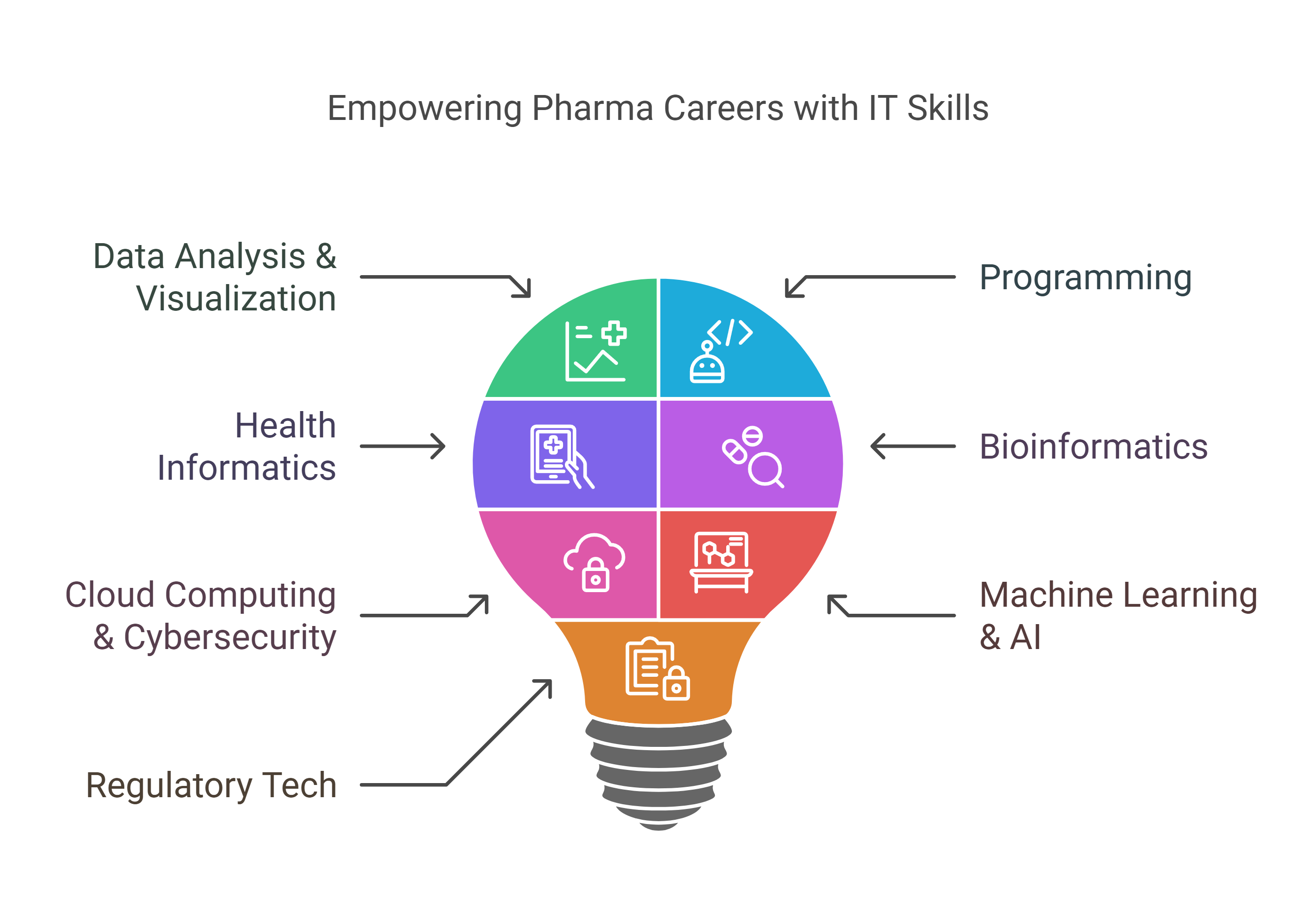
As the pharmaceutical industry increasingly integrates technology, having IT skills can give pharma students a significant career edge. Here are the most valuable IT skills that can open doors to better job opportunities:


1. Data Analysis & Visualization

📌 Why? Pharma companies handle vast amounts of clinical trial and healthcare data. Analyzing and interpreting this data is crucial.
Tools to Learn:

  • Excel & Google Sheets (Basic data management)
  • SQL (Database queries for structured data)
  • Python (Pandas, NumPy) (Data analysis)
  • Tableau & Power BI (Data visualization)

🔗 Learn More: Google Data Analytics Certification


2. Programming (Python & R)

📌Coding is becoming essential in drug research, clinical trials, and AI-driven healthcare solutions.
Best Languages for Pharma:

  • Python (For machine learning, automation, and data science)
  • R (Preferred in biostatistics and clinical trials)
  • SAS (Used in regulatory submissions and pharmacovigilance)

🔗 Learn Python for Free: Python for Data Science by IBM


3. Health Informatics & Electronic Health Records (EHR)

📌 Many hospitals and pharma firms use digital patient records, so knowing how to work with EHR systems is a plus.
What to Learn:

  • EPIC, Cerner, or Meditech (Popular EHR platforms)
  • HL7 & FHIR standards (Healthcare data exchange protocols)

🔗 Explore Health Informatics: Introduction to Health IT


4. Bioinformatics & Computational Biology

📌 Pharma research relies on computational models to design drugs and analyze biological data.
Skills Needed:

  • Molecular modeling software (PyMOL, AutoDock)
  • Genomic data analysis (BLAST, Biopython, Bioconductor)

🔗 Learn Bioinformatics: Coursera Bioinformatics Course


5. Cloud Computing & Cybersecurity

📌 Pharma companies store sensitive clinical trial data in the cloud, requiring security expertise.
Key Areas to Focus On:

  • AWS, Google Cloud, or Microsoft Azure (For cloud storage & computing)
  • Cybersecurity basics (Data encryption & compliance)

🔗 Get Started with AWS: AWS Cloud Practitioner Essentials


6. Machine Learning & AI in Pharma

📌 AI is revolutionizing drug discovery, diagnostics, and patient data analysis.
Beginner-Friendly Tools:

  • TensorFlow & PyTorch (Machine learning frameworks)
  • DeepChem (AI for drug discovery)
  • AutoML (No-code AI platforms)

🔗 Intro to AI for Healthcare: AI in Medicine Course


7. Regulatory & Pharmacovigilance Tech

📌 Regulatory agencies require pharma companies to use digital compliance systems.
Important Software to Know:

  • Argus Safety (Pharmacovigilance)
  • Veeva Vault (Regulatory submissions)
  • CTMS (Clinical Trial Management Systems)

🔗 Pharmacovigilance Guide: WHO Pharmacovigilance Training


Final Thoughts

“Pharma + IT is a powerful combination! Learning these tech skills will not only future-proof your career but also open doors to high-paying roles in healthcare technology.”

🚀 Which skill interests you the most? Let me know in the comments!